Bharatpur Visit
Birders' Heaven
"Birding" Destination
Haven for Migratory Birds
Bird Safari and Resorts stay
Bharatpur Visit
This game park neither boast of tigers nor vultures on treetops. It doesn’t even have the fairy-tale appearance of a jungle. In fact, it’s beauty lies in its less-than-a-jungle-like appearance. We are talking of the Keoladeo National Park. I visited the park more by coincidence. We had lost our way. We were headed for Agra from Delhi. None of us knew the route. So we constantly followed the map. By the time the map reached my hands, I, as is my wont, lost directions. And we headed straight for Bharatpur instead. By the time we knew we were wrong, it was quite late. Keoladeo made up for that disaster as most of us, in our group, were budding environmentalists and avid bird watchers. My friends were charitable though. They found me straight out of the book: “Why women can’t read maps: And Won’t Stop Talking.” Darkness had descended on Bharatpur by the time we arrived. So we busied ourselves hunting for bed and dinner.
Early next morning, we were ready to date the birds at 5:30. That’s when bird watching is at its best. Keoladeo National Park, in Rajasthan’s Bharatpur district. It was originally the private hunting ground of the maharajas of Bharatpur and converted into a bird sanctuary in 1956. It attained the “national park” status in 1981.
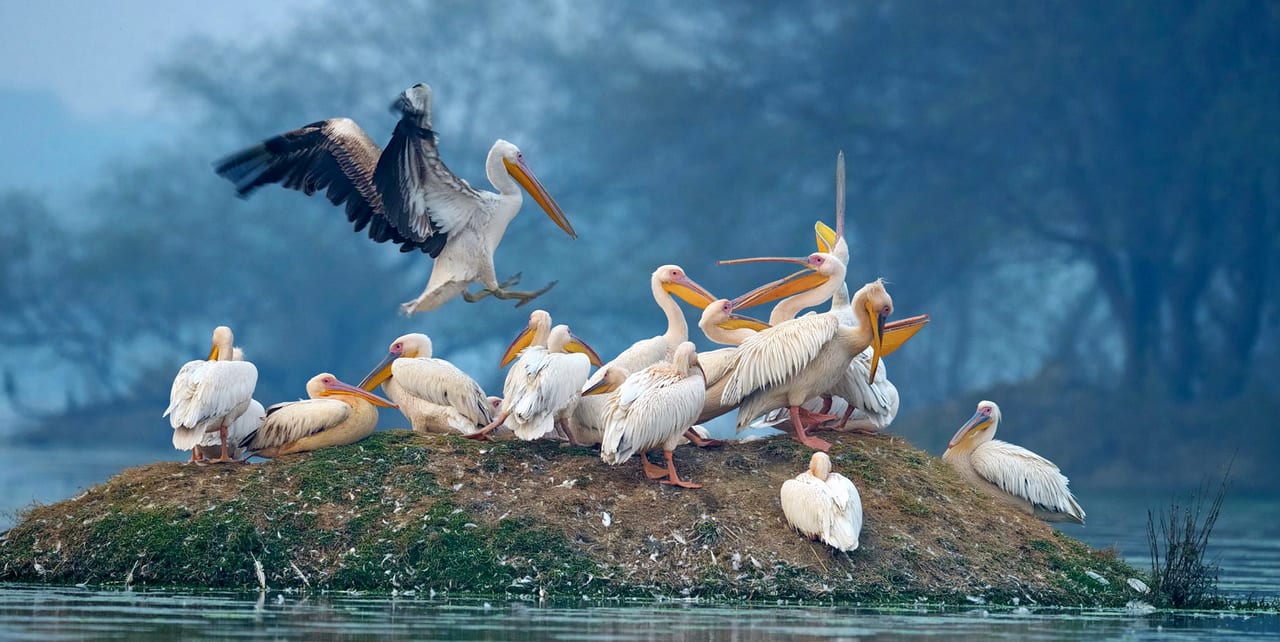
Keoladeo’s major attraction are the charismatic and alluring Siberian cranes. Studies prove that they arrive at the park after travelling 6, 400 km from their Siberian home. It’s the only regular wintering area in India for these cranes, among the world’s most endangered species. Bharatpur is a green town. You notice the difference when you drive from Ranthambore. It is visibly much greener and the trees look healthier than Ranthambore’s
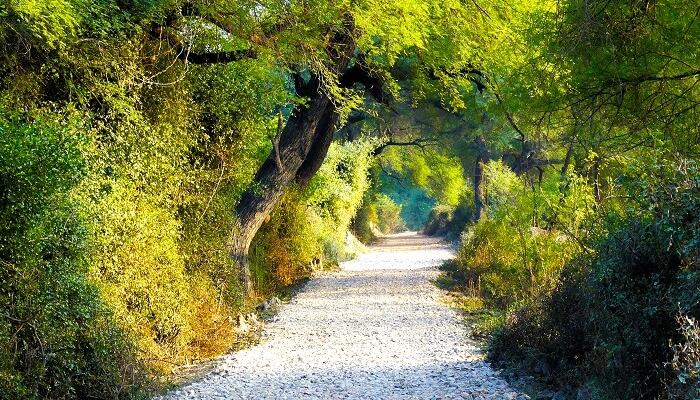
anorexic trees. Motorised vehicles are not allowed inside. You can only enter the park on rickshaws, bicycles or on foot. Which means that there are no blaring horns or dirty diesel fumes from overworked fuel tanks of jeeps. We were a sporty lot, so we all hired cycles to allow us to spot the birds at our convenience. And we yelled out at our first sighting: “It is an eagle…no its is a dusky owl. It’s koel…no it is a parrot.” It turned out to be a crow. That’s when we settled for Kumarji to guide us through the sanctuary.
There’s hardly much on view as you enter the park, except for monkeys, more monkeys and still more monkeys. You have to get closer to the wetlands to make the first of your spottings. Wetlands comprise over one-third of Keoladeo. You come across a lot of parrots, and the occasional bulbul. Trees like ber, khajur, babul and peepeul cover the park, providing ample shade to the surroundings. A lot of migratory visitors flock to this park and it’s a quite a sight to view them carrying camera stands on their backs and riding cycles. It seemed that our feathered friends had a little club of their own with these visitors. At the first turn we took, we came across pythons. I came to know that the park is famous for snakes — pythons, cobras, vipers, kraits, wolf-snakes, you name it and they are there. These creatures can be seen lounging near the swamps in the sun. There’s also one of India’s most endangered species the Indian rock python. Sadly, we missed an appointment with it and I came to know of it only after we had left the park.
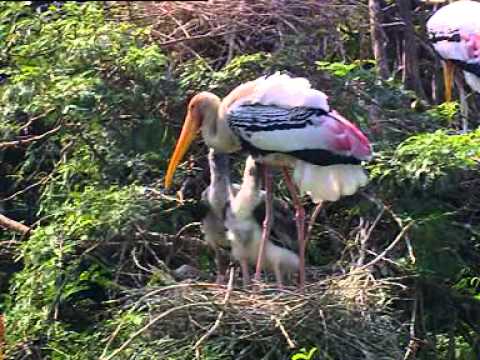
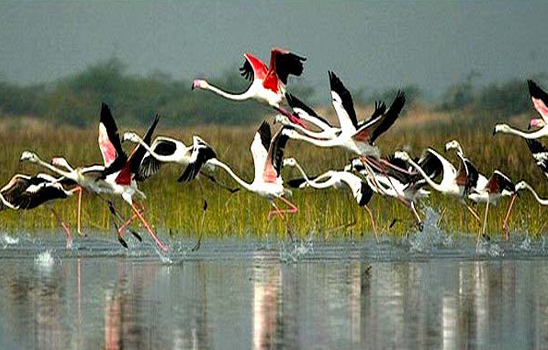
We parked our bikes and made ourselves comfortable around a marshy area, with plenty of bird life. We heard a loud chirping and asked Kumarji what bird it was. He said that they were squirrels whose whistles we mistook for birds. Soon we heard the cacophony of painted storks, open bills, spoon bills. It suddenly sounded as though these birds were having a heated discussion and no bird was ready to negotiate. A family of Jacanas with their gleaming colours and elegant tail feathers were tending to their young ones. As we were waiting to view more birds, we saw that the marsh had more life. Incredible numbers of dragonflies, damselflies, butterflies and water beetles were buzzing and zinging in the water. An occasional kingfisher would hover and then dive, then come out like a winner with a fish in its mouth…
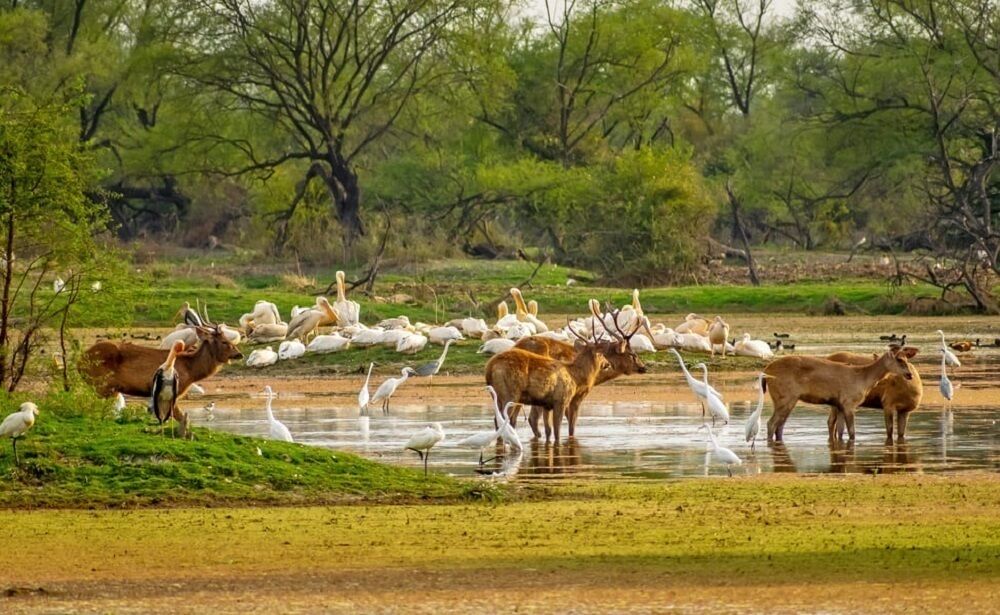
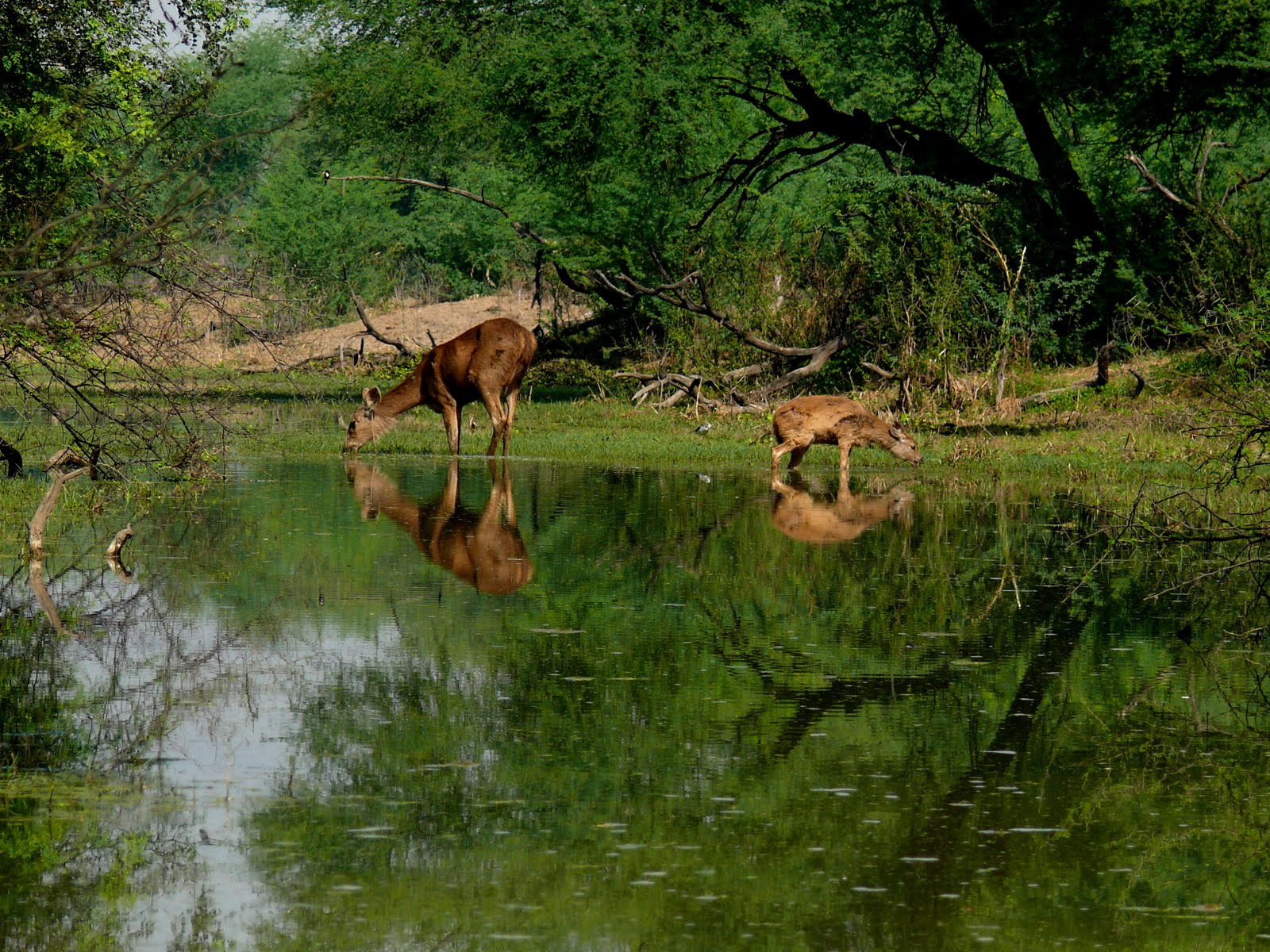
The park supports 43 species of fish and in a good rainy season, it receives more than 65 million fishes. It has an average of seven species of turtles and five species of lizards. The forest harbors a number of animals. Sambar, chital, nilgai, jackal, hyena, fox, mongoose and porcupine. Occasionally, a fishing cat can be seen scooping its prey from waters edge. A shrill sound emerged from a nearby swamp. A sambar had been bitten by a wild dog and was howling in pain. It was a very painful sight as the poor creature was in anguish. All the other sambars had gathered around and were licking its wound. The bonding among them was nice and touching. It showed how in times of trouble, wild creatures too can come together. The entire incident was quite disturbing and we came to know later that in seasons when there is a shortage of food, the wild dogs bite these creatures slowly to death. And then devour them.
I decided it was time to explore the park. I went further and came across a lot of bird life. Egrets, cormorants and white ibis. I was able to identify them thanks to my being a member of the Delhi Bird Club. I was joined by my group and we left for another marshy area and parked ourselves under babul and ber trees. The vegetation of the marshes is rich and provides a food source for waterfowl. Plant species include water lilies, the true lotus, duckweed, water fern, sedges and lesser reed mace. Wild rice grows in parts and is good source of food for the birds. The list here included kingfisher, dove, mynah, bulbul, blue jay, parakeet, bee-eater, wagtails and finch. We came across a couple of open-billed storks and white ibis.
You can also visit the palace and forts at Deeg nearby and pay your homage to the holy saint at Fatehpur Sikri 30 km away.
The best time to visit Bharatpur is Nov to February.
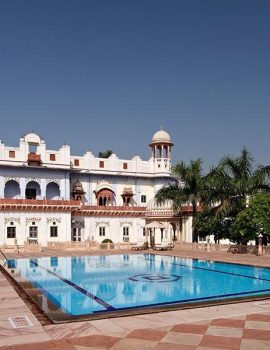
Set amongst a sprawling 50 acres, the Laxmi Vilas Palace Heritage Hotel was built in 1857 for Raja Raghunath Singh, the younger brother of then ruler of Bharatpur, Maharaja Ram Singh son of Maharaja Jaswant Singh.
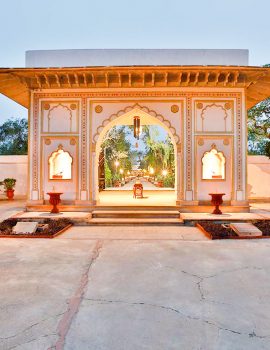
The Bagh Bharatpur is a beautiful resort located in around 30 acres of mixture of forested area and farm land with 38 rooms. 23 rooms are built in Heritage style while 15 rooms are newly constructed in the Farm wing surrounded by plantation of wheat, potato and various other vegetables.
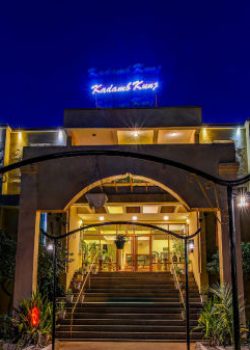
Kadamb Kunj bharatpur
Surrounded by Yellow and green mustard fields from 3 sides, the Kadam Kunj is named after the old royal hunting lodge of Bharatpur. The hotel has green lawns within it’s gates which can be used for an outdoor party

Uday Villas Bharatpur
Situated a little distance from the bird sanctuary on the Sikri Road, the resort has excellent rooms along with very green surroundings and a lot of open space. Run by a naturalist himself the resort boasts of a swimming pool, table tennis, carrom, airconditioned restaurant and Conference hall.
“I would never believe …
Marianne Faith
Our regular visitor
“I would never believe anyone trying to describe or explain what an experience is to stay in this suite. Once I stayed with my husband in “Beautuful Maria”, I’m returning every year, for 8 years now … ”
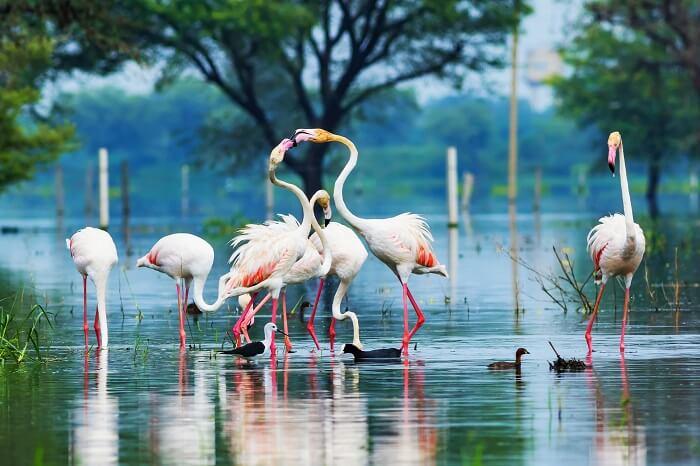
Bharatpur Visit Gallery
Browse through our beautiful showcase of sights around town.